The best hair dryer is the one that gives you useful control over heat and airflow, includes the attachment you actually use, and feels comfortable in your hand. For most people, start with a full-size model with adjustable heat and speed, a suitable concentrator or diffuser, and an accessible filter—not the biggest wattage number or the highest price. This is a research-based buying guide, not a hands-on test or a ranking of specific models. The American Academy of Dermatology’s healthy-hair tips, last updated August 12, 2024, recommend limiting blow-drying and using low or medium heat and a heat-protective product.
Featured image: “Hair dryer” by exfordy (source photo), licensed under CC BY 2.0. Resized and padded. Illustrative stock; no product testing is implied.
Key Takeaways
- Choose heat and speed controls that let you use less heat when you need it.
- If you plan to use an attachment, confirm the exact dryer supports and includes the one you want; check the maker’s instructions for its intended use.
- Treat wattage as one clue, not a complete measure of drying performance.
- Pay for comfort, useful controls, and the right attachments before paying extra for high-tech claims.
- Keep the air intake clear and follow the maker’s filter-cleaning instructions.
Start with your routine, not a “best” label
A product labeled “best” cannot tell you whether its grip is comfortable, its settings suit your hair, or its box includes the right attachment. Those are the details that shape everyday use. First decide what you want the dryer to do: rough-dry hair quickly, smooth sections with a brush, follow your usual curl-styling routine, or pack away easily between trips.
Then compare models on a short list: adjustable heat and speed, the attachment you need, a manageable weight and handle, a cleanable air intake, and a price that fits your budget. Do not assume a premium price or a long list of technologies guarantees a better result for your hair. Since models and bundles change, compare the exact model number and what is included rather than relying on a product-family name.
Which hair dryer is best for your hair type?
Use hair type as a starting point, then adjust for your routine. The AAD notes that hair-care products and routines should suit the person’s hair type, and advises using low or medium heat to limit heat exposure. Hair length, styling habits, and how often you dry it matter too.
| Your priority | Look for | Trade-off to consider |
|---|---|---|
| Fine, straight, or heat-sensitive hair | Low and medium heat options, more than one airflow speed, and a lightweight body | Maximum heat may be unnecessary; favor control over headline power |
| Thick, long, or dense hair | Strong airflow, multiple speed and heat choices, and a comfortable grip for longer sessions | Higher wattage can indicate more power, but the number alone does not tell you how the dryer will feel or perform |
| Curly or coily styling | If you plan to use a diffuser, confirm the exact model supports it and check the maker’s instructions for use | Compatibility and included attachments vary by model |
| Smoothing sections with a brush | If you plan to use a concentrator, confirm the exact model supports it and check the maker’s instructions for use | Check whether it is included; some bundles may sell attachments separately |
These are buying priorities, not promises that a specific setting or attachment will prevent damage. For any hair type, the practical choice is a dryer that lets you work at a lower heat when that is enough and supports any attachment your routine requires.
Features worth comparing before you buy
Heat and speed controls
Look for separate, clearly labeled heat and airflow controls rather than a single switch with vague settings. More control makes it easier to choose a comfortable combination for your routine. The AAD advises limiting blow-drying and using low or medium heat; a “cool” setting can be a useful option, but do not treat it as a substitute for sensible distance, movement, or less frequent heat styling.
Wattage and drying speed
Wattage describes electrical power, not a guaranteed number of minutes saved. Electrical Safety First’s consumer guide to hair dryers says higher wattage means more power and faster drying. Use that as a comparison clue, then check heat and speed controls, attachments, and the maker’s description of airflow. If you want a plain-language explanation of power use, see our guide to how many watts a hair dryer uses.
Attachments
Neither a diffuser nor a concentrator is essential for everyone. If you expect to use one, check the exact model’s product listing or manual to confirm that it is compatible, whether it is included, and how the maker says to use it; “available” may mean an added purchase.
Weight, balance, and filter access
If possible, hold the dryer before buying. A handle that feels balanced and controls you can reach without changing your grip may matter more than an extra mode, especially if you dry your hair in sections. Look at the filter, too: Electrical Safety First notes that removable air filters can be easier to clean. A filter you can access according to the manual is more practical than one you are unsure how to maintain.
Spend on the features you will use
A budget dryer can be a sensible buy if it has the settings you need, fits your hand, and comes with your essential attachment. Before choosing the cheapest listing, check the seller, warranty terms, return policy, and the model’s included accessories. Compare the total cost if a diffuser or concentrator is sold separately.
A higher-priced model may make sense when it solves a real problem for you: a better-feeling handle, a lighter body, easier filter access, or a useful attachment bundle. It is harder to justify extra cost for a feature you will not use or a broad “less damage” claim with no clear explanation. No price tier can guarantee that a dryer will suit every head of hair, and this guide does not endorse or test individual brands.
If you are comparing power and energy use, our article on hair dryer wattage explains why a higher wattage rating is not, by itself, a complete measure of what a particular drying routine will cost.
Handheld or hooded: choose the format
Most home shopping comparisons focus on handheld dryers. If you usually sit under a hooded dryer for a set style, that is a different format and may fit your routine better than a handheld model. The image below shows a salon hooded dryer; it is illustrative, not a product recommendation or a test result.
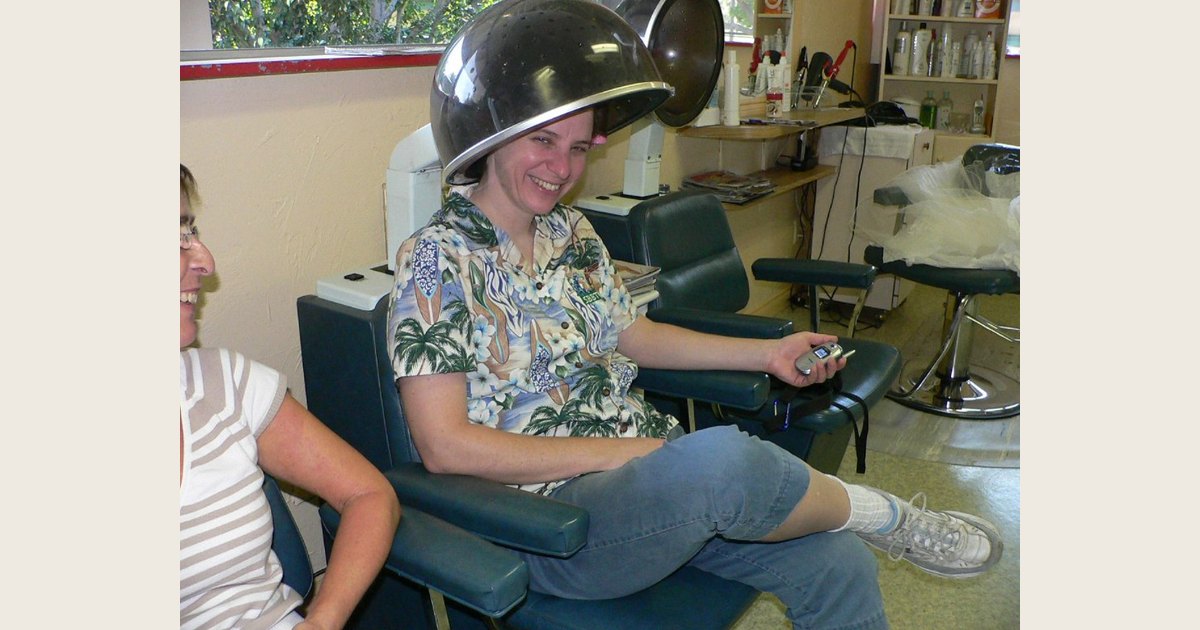
An example of a hooded dryer, a different format from the handheld models this guide focuses on. Photo: “Jeri under the hair dryer” by basykes (source photo), licensed under CC BY 2.0. Resized and padded; illustrative stock, with no product testing implied.
A quick shopping checklist
Before you order, check each point against the exact model listing and manual:
- Does it have separate heat and speed choices you will actually use?
- Is the diffuser or concentrator you want included and compatible?
- Can you hold and maneuver the dryer comfortably?
- Is the filter accessible, and does the maker explain how to clean it?
- Are the seller, warranty, return terms, and full attachment cost acceptable?
- Are the product claims specific enough to compare, rather than just labels such as “salon quality” or “ionic”?
If the listing hides an important detail, look up the model’s manual or ask the seller before buying. A clear, ordinary dryer that fits your routine can be a better choice than a more expensive model with features you will not use.
Use and maintain it with care
The dryer is only part of the routine. The AAD says wet hair is delicate, recommends gently absorbing moisture with a towel or T-shirt instead of rubbing, and advises using low or medium heat and a heat-protective product. Limit blow-drying when you can. For practical distance, movement, and drying steps, see our guide to using a hair dryer without damaging your hair.
Follow the dryer maker’s instructions for cleaning and maintenance; details vary by model. Electrical Safety First advises keeping air openings clear, cleaning filters as directed, keeping the dryer away from baths and sinks, and unplugging a dryer if it is damaged or sparking. It is a UK-based safety organization, so use local electrical guidance and the model’s instructions for country-specific requirements.
Frequently asked questions
What is the best hair dryer for most people?
For a versatile starting point, choose a comfortable full-size dryer with adjustable heat and speed, a filter you can maintain, and the attachment that matches your routine. There is no single best model for every hair type or budget, and this guide does not claim to have tested specific dryers.
Does a higher-wattage hair dryer dry hair faster?
Higher wattage generally indicates more power, and Electrical Safety First says higher-wattage dryers dry faster. But wattage alone is not a model-by-model performance test or a reason to ignore heat controls, weight, attachments, and how the dryer feels in use.
Do I need a diffuser?
Only if you expect to use one as part of your routine. Check the maker’s instructions and confirm that the diffuser is compatible with the exact dryer model and included in the price you are comparing. Otherwise, there is no need to pay for an attachment that will sit unused.
The best choice is a dryer whose controls, weight, and attachments fit your actual routine. Prioritize the features you will use, keep heat moderate when possible, and compare the exact bundle and care instructions before you buy.