Yes—an electric toothbrush can usually travel with you. For a rechargeable model, put the toothbrush in your carry-on when practical. The Federal Aviation Administration (FAA) says electronic devices containing lithium batteries should be carried in cabin baggage, where the crew can respond if a battery problem occurs. If you do put a lithium-powered toothbrush in checked luggage, it needs to be completely switched off and protected from accidental activation and damage. FAA PackSafe guidance
The brush itself is rarely the issue; the battery arrangement is. An installed battery, a removed spare battery, and a portable recharging case can follow different rules. Keeping the brush in your personal item makes it accessible and avoids last-minute sorting if your cabin bag is checked at the gate.
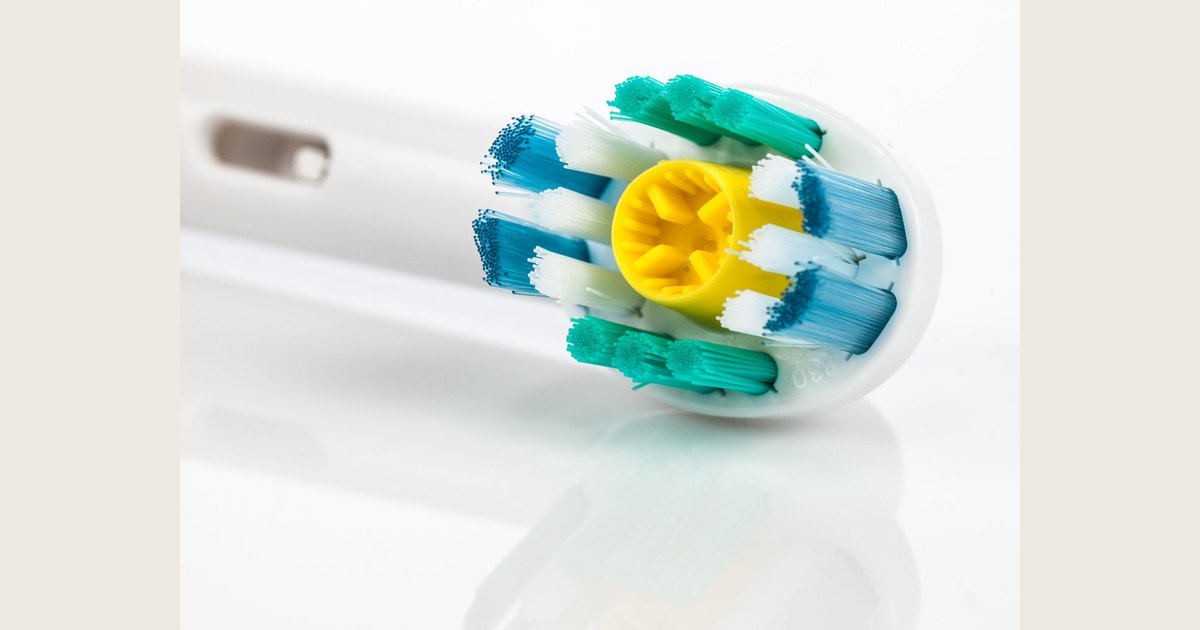
Featured image credit: Photo: Electric Toothbrush Head by wwarby, CC BY 2.0. Resized and padded. Illustrative stock photo; no product testing is implied.
Key takeaways
- A rechargeable electric toothbrush is best packed in your carry-on.
- A lithium-battery toothbrush may go in a checked bag only when it is fully powered off and protected against activation or damage.
- Spare or removed lithium batteries must stay in the cabin, not in checked luggage.
- A battery-containing charging case or power bank needs extra attention; check your airline before flying.
- Toothpaste in a carry-on must follow the TSA liquids rule.
Carry-on vs. checked bag: the practical answer
If you are asking, “can you bring an electric toothbrush on a plane?” the simplest answer is yes: pack the brush in your carry-on and leave its battery installed. That approach lines up with the FAA’s preference for lithium-battery devices to travel in the cabin. It also means you can use it after a delayed or missed checked bag, and it is less likely to be crushed by other luggage.
Checking the toothbrush is not automatically off limits. The FAA says a portable electronic device powered by a lithium battery that is placed in checked baggage must be completely powered off and protected so it cannot turn on by accident or be damaged. “Sleep” mode is not the same as off. Use the device’s power button, and turn on its travel lock if it has one. A hard travel case or a padded toiletry bag provides a sensible layer of physical protection. FAA: portable electronic devices containing batteries
Here is the distinction to keep in mind while packing:
| What you are bringing | Best place to pack it | Important step |
|---|---|---|
| Rechargeable toothbrush with its battery installed | Carry-on | Switch it off and use a cap or case to keep the head clean. |
| Same toothbrush in a checked bag | Carry-on is preferred; checked bag is possible under FAA device guidance | Power it off completely and protect it from activation and damage. |
| Removed or spare lithium battery | Carry-on only | Protect terminals from contact with metal and prevent damage. |
| Portable power bank or battery charging case | Carry-on only | Do not leave it in a gate-checked bag. |
| USB cable or wall charger without a battery | Either bag, subject to normal airline baggage rules | Coil the cord so it does not snag or strain the connector. |
These are U.S. aviation safety rules for battery-powered consumer electronics, rather than a promise that every checkpoint or airline will treat every product identically. An officer may need to inspect an item, and a carrier can adopt tighter rules.
Why the battery setup matters
The FAA explains that lithium-ion batteries can overheat and undergo thermal runaway, and that crews are trained to respond to battery fires in the cabin. That is why cabin baggage is the preferred location for devices with lithium batteries. FAA lithium-battery guidance
A normal electric toothbrush does not need special checkpoint handling beyond sensible packing. The details change only when you remove a battery or bring an accessory that can recharge a device.
The battery is removable
If you take a lithium battery out of the toothbrush, it becomes a spare battery. The FAA says spare, uninstalled lithium-ion and lithium-metal batteries are prohibited in checked baggage and must be carried in the cabin. Keep each spare battery in its original package, a battery case, a sleeve, or another protective pouch. The FAA also says terminals must be protected against short circuit—for example, by using a case or covering terminals with tape. FAA: lithium batteries
Do not put a loose battery in the bottom of a toiletries bag alongside coins, keys, or other metal objects. If your carry-on is taken at the gate, remove any spare batteries and keep them with you in the aircraft cabin.
The charging case has its own battery
Some travel accessories do more than hold a toothbrush: they can recharge a device without being plugged into a wall outlet. A case like that functions as a portable recharger. The FAA requires power banks and other portable rechargers containing lithium batteries to travel in carry-on baggage only. Airlines may set stricter quantity or watt-hour limits for portable chargers. FAA: lithium batteries
A basic wall-powered charging stand is different because it does not store battery power itself. If you are not sure whether a case contains a battery, look at the product manual or its label before you leave. When in doubt, carry it in the cabin and confirm with the airline.
How to pack an electric toothbrush for a flight
A small amount of preparation protects both the toothbrush and the rest of your toiletry kit.
- Charge it before the trip, but do not leave it plugged in while packed. A charged brush removes the need to unpack a charger during a short trip.
- Turn it off fully. Enable the travel lock when your model has one. If it does not, make sure the switch cannot press against other items.
- Cover or case the brush head. A ventilated head cover or travel case keeps the bristles away from the inside of your bag. Let a wet brush head air-dry briefly first when possible.
- Use a protective case. A rigid case is useful for checked luggage; a soft pouch can be enough for a carry-on if the handle is not loose among heavy items.
- Keep battery accessories together. Put a removable battery, charging case, or power bank in an easy-to-reach pocket of your personal item rather than scattering them through your luggage.
- Separate liquids. Put toothpaste and other gels in the clear liquids bag if you are carrying them through security.
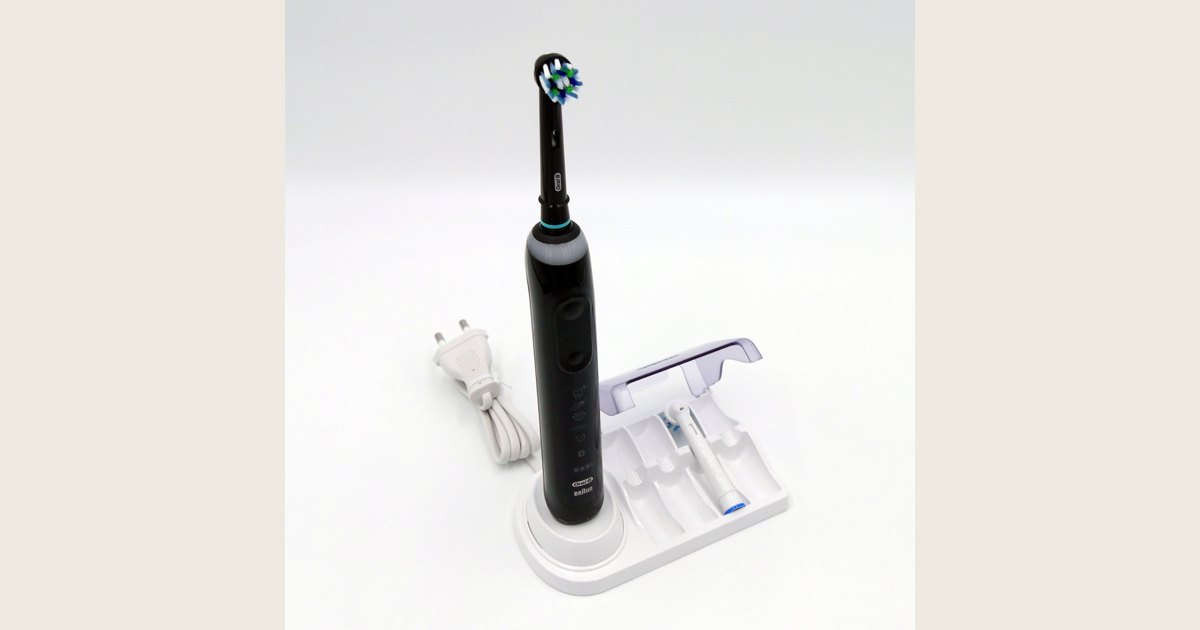
An electric toothbrush and charging stand; use a protective travel case or pouch when packing a similar device. Photo: Oral-B Genius 9000 Midnight Black Electric Toothbrush by electricteeth, CC BY 2.0. Resized and padded. Illustrative stock photo; no product testing is implied.
If the brush has toothpaste residue, wipe the handle clean before packing. It keeps dried paste off the case, cable, and other toiletries. The same approach works for a water flosser handle or other dental device you bring along.
Once you arrive, use the brush as directed rather than pressing harder to compensate for travel. For a refresher, see our guide on how to use an electric toothbrush correctly. Travel rules do not change proper brushing technique.
Toothpaste, replacement heads, and other dental items
A replacement brush head is not a battery and does not create a special aviation concern. Pack it in a small clean container so the bristles remain protected. Dental floss and a manual toothbrush are also straightforward toiletry items.
Toothpaste is the part of the kit that must follow the liquids rule in a U.S. carry-on. TSA permits liquids, aerosols, gels, creams, and pastes in travel-size containers of 3.4 ounces (100 milliliters) or less per item, placed in a single quart-sized bag. Larger toothpaste containers belong in checked baggage. TSA liquids, aerosols, and gels rule
A practical setup for a carry-on is a toothbrush in its case, one travel-size toothpaste tube in the liquids bag, and a replacement head in a separate small pouch. If your toothpaste tube is partly used but the package itself is larger than 3.4 ounces, pack it in checked luggage; TSA’s limit is based on the container size, not how much product remains.
International trips and airline-specific limits
The TSA rule applies to security screening in the United States. On an international itinerary, the rules at your departure airport and any connecting airports can differ. Your airline may also have its own battery policies. The FAA specifically notes that many domestic and international airlines can impose stricter quantity and watt-hour limits for power banks and portable chargers. FAA: lithium batteries
For an ordinary toothbrush with its battery installed, carry-on packing remains the least complicated option. Take an extra minute to check the airline’s current dangerous-goods or battery page if you have removable batteries, a battery-powered case, multiple charging accessories, or an unusually large device battery. That check matters more than the brand name printed on the handle.
Common questions about flying with an electric toothbrush
Can an electric toothbrush go through airport security?
Yes, a normal electric toothbrush can go through security. Keep it accessible in your carry-on in case an officer needs a closer look. The toothbrush itself is not a liquid; its toothpaste is the item that needs to meet the carry-on liquids limit.
Can I put an electric toothbrush in checked luggage?
You can, but carry-on is preferable for a toothbrush with an installed lithium battery. If it goes in checked baggage, follow the FAA’s conditions: completely power it off and protect it from accidental activation and damage. Never put a removed or spare lithium battery in the checked bag. FAA: portable electronic devices containing batteries
Can I bring the charger?
A cord and a wall charger without a battery are generally the simple part of the kit. A portable charging case or power bank is different: if it contains a lithium battery and functions as a portable recharger, keep it in carry-on baggage and check the airline’s current restrictions.
What if my carry-on is gate-checked?
Before handing over the bag, remove any spare lithium batteries and power banks. FAA guidance says they must remain with you in the cabin when a carry-on is checked at the gate or planeside. If the toothbrush itself stays in the bag, ensure it is fully powered off and protected.
What if the toothbrush battery is damaged or recalled?
Do not pack a damaged battery-powered toothbrush just to get it home. The FAA says damaged or recalled battery-powered devices that are likely to create sparks or dangerous heat cannot travel in carry-on or checked baggage unless the battery has been removed or the item has otherwise been made safe. Check the manufacturer’s recall information and ask the airline for product-specific guidance. FAA PackSafe guidance
The easy packing rule to remember
Put your electric toothbrush in your carry-on, switch it off, and protect it with a case or head cover. Keep any removed lithium batteries and portable charging accessories in the cabin, and place travel-size toothpaste in your liquids bag. Those few steps handle the common battery and screening issues without forcing you to give up the toothbrush you use at home. For help deciding whether the extra device is worthwhile in the first place, read our comparison of electric and manual toothbrushes.